For Humanity, International Understanding and World Peace
All about compassion, humanity, international understanding, world peace and making life meaningful.

All about compassion, humanity, international understanding, world peace and making life meaningful.
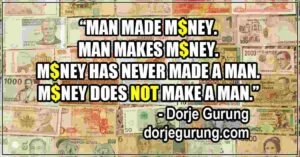
Man (rather human beings) made money. Man makes money. Money has never made a man. Money does NOT make a man.
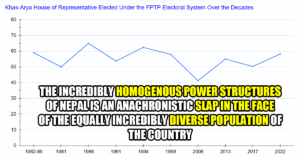
As Nepal approaches the March 5, 2026, general election for the 165 First Past The Post (FPTP) seats in the House of Representatives, an analysis of candidates fielded by nine select political parties suggests that the results are unlikely to deviate significantly from historical trends. The data indicates that the House will likely retain a Khas-Arya plurality, maintaining a demographic imbalance that has remained a persistent structural feature throughout the country’s 250-year history.
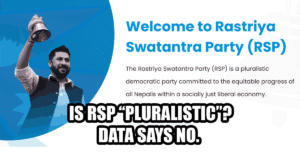
When the standard of education is abysmally low and a 200-year history of mixing politics with religion persists, the population often seeks a 'savior' to navigate systemic challenges. Rabi Lamichhane, a leader from the structurally privileged Khas-Arya demographic, has been positioned as a messianic figure. However, data indicates his party is of, for, and by Khas-Arya men—indistinguishable from the establishments the population seeks to replace. So long as educational and political awareness remains stagnant, this cycle of deification and disillusionment is likely to continue.

A chameleon changes color to adapt to the physical environment around it—more often than not to save itself, not because it loves the environment.
Following the September 2025 fall of the government, Nepali Congress leader Gagan Thapa successfully leveraged the 'reformer' label to seize leadership from Sher Bahadur Deuba. But while the face has changed, the soul of the party remains the same: a bastion of Khas-Arya privilege. Despite the rhetoric of a 'New Nepal,' the upcoming 2026 elections reveal a familiar reality, with over 52% of the party’s tickets handed to Khas-Arya males, leaving marginalized groups like Dalits with a near-invisible 0.6% representation.
Returning to Nepal in 2013 after spending most of the preceding twenty-five years abroad, I made a few devastating discoveries about Nepali society. One was how hollow and deeply flawed it was. Struggling to recover from major personal issues, I needed to understand the details of this "hollowness" for my own sanity. Starting in late 2020, I began documenting evidence of this decay on X/Twitter. In this post, I share an analysis of those 130 documented instances to demonstrate exactly how and why Nepali society is currently lost in a state of hollow confusion.